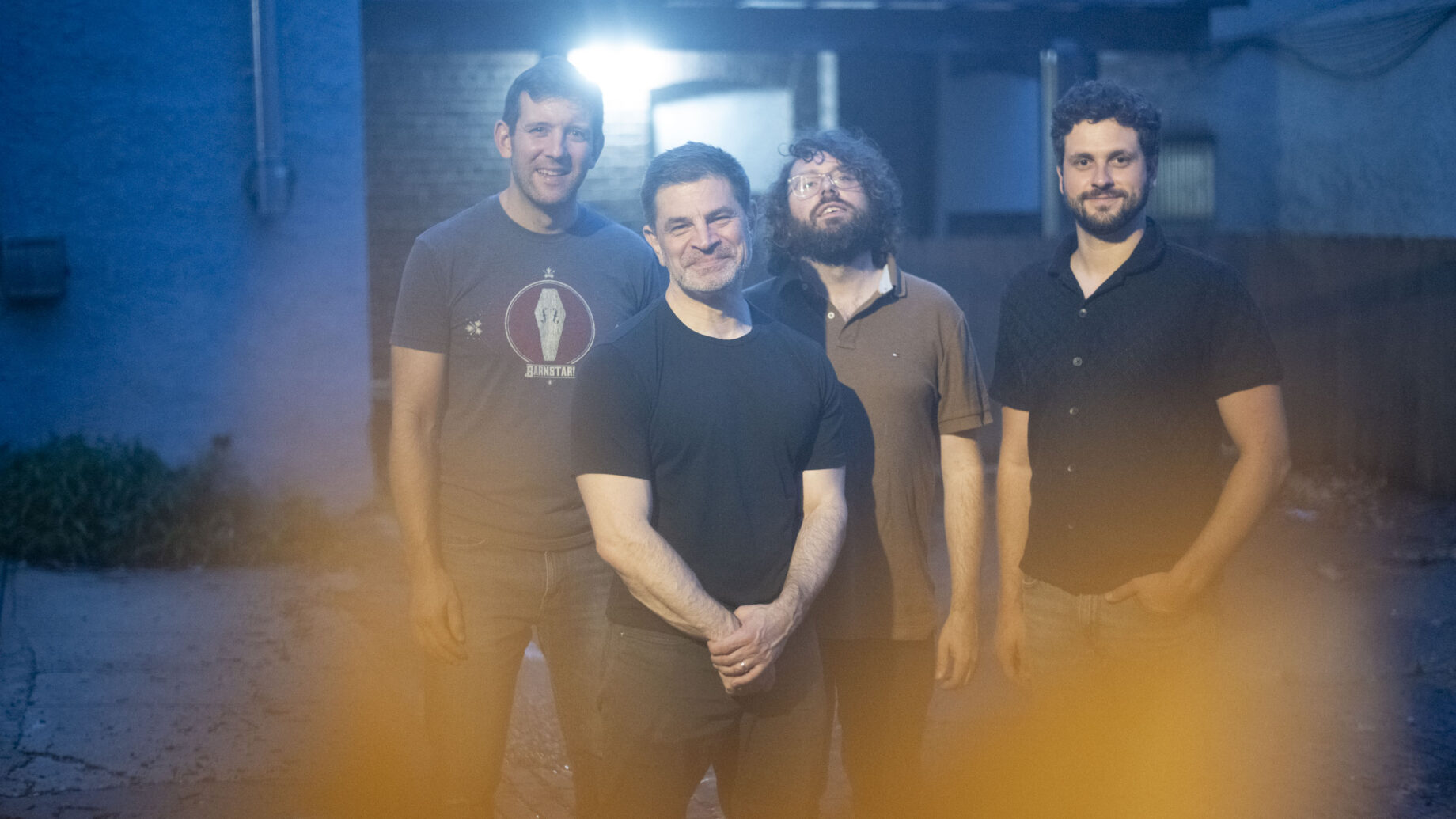
At The Daybreak Line’s final show in late 2007, a newly written song received its first performance. The venue was Iota in Arlington, Virginia, and the song would outlive the band by considerably more than anyone that night could have known. Honeybee, now released by Faint Halos on September 25, 2026, carries that history into a new recording. It is the project’s only song inherited from that earlier period. Nearly two decades separate its first appearance from this version, making it an unusually tangible connection between a musician’s previous life and the work he eventually returned to.
The interruption was substantial. Faint Halos’ songwriter describes a fifteen-year gap from playing music, with writing beginning again in 2020 before the current band took shape. At that point, there was no settled plan for what the new project should sound like. There was, however, a reference point already waiting: Honeybee. He wanted to write more songs with its character, even though it had originally stood apart from his earlier material. That reversal is fascinating. A song once considered an exception became a clue to where the next chapter might begin, carrying an instinct that survived the years away.
An earlier version appeared on the first Faint Halos EP, Light On, but the assembled band felt the song deserved another recording. It had become a shared favourite, and they wanted a more organic, natural version for their upcoming album. That decision gives this release a purpose beyond revisiting an old composition. The song now belongs to musicians who discovered possibilities in it together. Its history remains personal, while its present has become collective. As the album’s closing track and Faint Halos’ third single of the year, Honeybee occupies a prominent place in the project it helped point towards.
Its structure supplies one reason for that attachment. There is only one fully sung chorus, with the first appearance of the chorus arriving instrumentally. The songwriter identifies a similar arrangement principle in Journey’s Don’t Stop Believin’, an observation about form rather than a claim that the songs sound alike. The device offers a satisfying possibility: a melodic destination can become familiar before the vocal finally occupies it. Anticipation grows through recognition, and repetition gains a different function. The song has already introduced the place where it is heading, leaving the listener to experience what changes once words arrive there.
That unusual shape was present from the beginning. According to its writer, Honeybee emerged fully formed, including the departures from his usual approach. The experience felt sufficiently familiar that he briefly worried he might have remembered someone else’s song, recalling Paul McCartney’s famous uncertainty about Yesterday. The comparison belongs to the circumstances of composition, where something arriving easily can seem suspicious precisely because writing usually demands effort. What matters here is that he allowed the odd structure to remain. He kept the first impulse intact, preserving a song whose logic differed from the habits surrounding it.
The bridge prompts another reference, this time to Wilco through the relationship between rhythm and melody. It is a useful description because it locates an influence in how musical parts interact. A phrase can feel slightly unexpected because of where it meets the beat, making a familiar vocabulary behave differently. The songwriter’s account suggests that Honeybee caught his attention through such internal relationships. Its identity involves the way it moves between sections and how those sections make room for one another. That gives the song a more specific point of interest than its long journey to release alone.
Then there is the outro, a melody its writer finds both natural and surprising even when repeated. He affectionately imagines it accompanying an extended sequence of film credits, invoking Purple Rain as his private shorthand for the possibility. That image suits an album closer particularly well. An outro can offer time to remain inside the feeling a song has created, allowing repetition to deepen an impression rather than simply prolong it. The attraction lies in the balance he describes: enough familiarity to welcome another pass, with something left unsettled that makes the return worthwhile.
The lyrics introduce a different kind of openness. They are more obscure and less expansive than the writer’s customary confessional style, and listeners have consistently found different meanings in them. He understands the song as a sad reflection on entropy and the unavoidable progress of deterioration. Others hear encouragement. Those responses need not cancel each other out, especially in a composition whose musical movement apparently offers familiarity alongside surprise. Something can acknowledge that everything changes while still making the experience of being present feel valuable. The song’s brevity of expression leaves space for listeners to decide where its emotional emphasis falls.
Honeybee gains poignancy from the fact that it has itself travelled through change. A final band performance, a lengthy absence, an EP recording and a new collective interpretation all belong to its life. The current version places it at another ending, closing an album while preserving the possibility that sadness and uplift can coexist. Its most appealing quality may be the trust involved in returning to a strange song that never quite fitted elsewhere. Faint Halos have given that exception a home. The melody continues, familiar enough to recognise, with room left for whatever another listener might discover inside it.
Play “Glasshouse”
The Spotify player loads when you press play.
Listen to Glasshouse